 Travel Guide
Meghalaya Trip Cost from Bangalore: 5-Day Guide (2026)
Plan your Meghalaya trip cost from Bangalore with a 5-day itinerary covering flights, stays, meals and transfers. Explore the full itinerary and enquire today.
Read Article
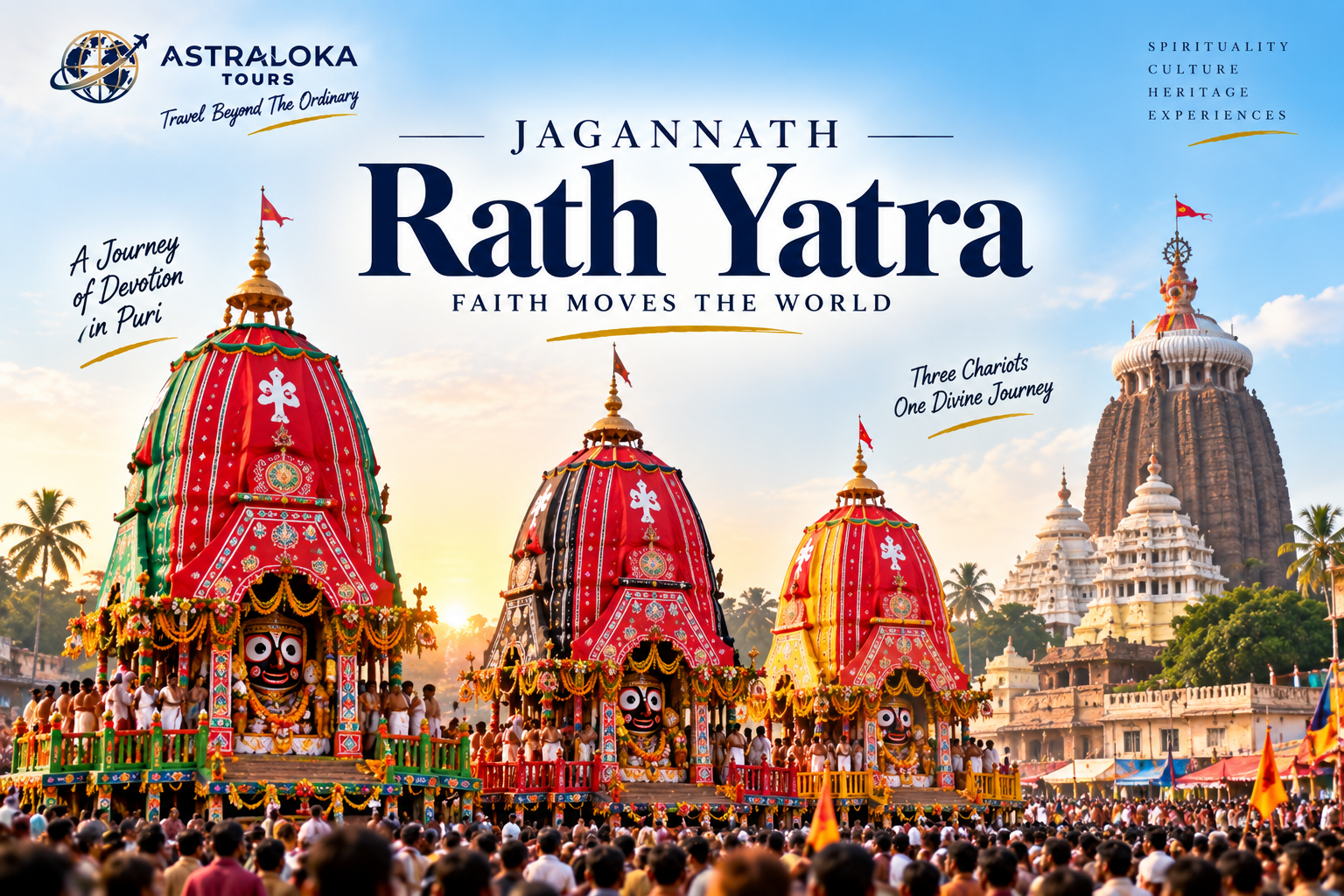
Three chariots, nine days and a crowd measured in lakhs. This guide explains how the Jagannath Rath Yatra actually unfolds at Puri, when it falls, where to stand, and what a first-time pilgrim from Bengaluru should plan around.
The chariots are the photograph. The festival is nine days long, and most first-time visitors arrive for the wrong one of them.
Understanding the sequence changes where you stand, which night you book, and whether you see the deities at all. This is how the Jagannath Rath Yatra works in practice.
The Jagannath Rath Yatra is the annual chariot festival at Puri in which Lord Jagannath, his brother Balabhadra and their sister Subhadra leave the main temple and travel to the Gundicha Temple. The Ministry of Culture’s festival record places it on the second day of the bright fortnight of Ashadha.
The deities are joined by the Sudarshana Chakra. They are drawn along the Bada Danda, the grand avenue, by ropes pulled by the crowd itself rather than by any machinery.
The scale is hard to convey. The Jagannath Rath Yatra regularly draws crowds counted in lakhs into a single avenue, which is why the town’s entire road network is reorganised around it for the week.
Puri’s temple is otherwise closed to non-Hindus. During the chariot festival the deities are outside on the avenue, which makes this the one occasion when anyone at all can see them.
It falls on Ashadha Shukla Dwitiya, which lands in late June or July depending on the lunar calendar, so the Gregorian date moves every year. The full observance runs nine days from that morning to the Bahuda Jatra return journey.
Do not plan flights around a date you read in an old article. Confirm the year’s calendar before booking, because a shift of two weeks is normal.
The build-up matters too. Snana Purnima, the ceremonial bathing of the deities, comes a fortnight earlier, after which the deities are kept away from public view during a period called Anasara while they are said to recover.
The festival is a journey out and a journey back, with a stay in between. Treating the Jagannath Rath Yatra as a single-day event is the most common planning mistake, because several of the most striking rituals happen at the other end of the week.
| Stage | Roughly when | What happens |
|---|---|---|
| Snana Purnima | About 15 days before | The deities are bathed publicly with 108 pots of water |
| Anasara | The fortnight before | Deities withdrawn from view, no darshan at the temple |
| Pahandi and Rath Yatra | Day 1 | Deities carried out in procession and the chariots are pulled |
| Stay at Gundicha | Days 2 to 8 | Darshan continues at the Gundicha Temple |
| Bahuda Jatra | Day 9 | The return journey, with a halt at the Mausi Maa Temple |
| Suna Besha | The day after arrival back | The deities are adorned in gold ornaments on the chariots |
Reading the table as a whole is the point. A visitor who books only the first day of the Jagannath Rath Yatra sees the chariots move and misses both the gold ceremony and the calmer darshan at Gundicha.
Suna Besha is the one people regret missing. The deities are dressed in gold while still on the chariots, and it draws enormous crowds for a comparatively short window.
Three, each rebuilt from new wood every year to fixed traditional specifications, with only the deities and certain finials carried over. They differ in height, wheel count and colour scheme so the crowd can tell them apart from a distance.
Carpenters begin the work months ahead using timber of specified species brought in for the purpose. Nothing structural is reused, which is why the scale of the operation is as remarkable as the day itself.
The timber sourcing is its own annual ritual, with logs traditionally brought from designated forests and floated down river before being carted to Puri. Preparation begins months before anyone sees a finished chariot.
Pulling a rope is considered meritorious, and the crowd around the ropes is dense and physical. If you are travelling with children or elderly relatives, watch rather than participate.
Along the Bada Danda, and the earlier you claim a position the better. Rooftop and balcony viewing from buildings along the avenue is the comfortable option, and those spots are arranged well in advance rather than on the day.
Practical points that decide your day:
The chariots do not always complete the journey in one day. If the pulling runs late, they halt and resume the next morning, which is normal and not a sign that anything has gone wrong.
Give the trip more than the festival. The Puri Jagannath Temple itself, the Mahaprasad kitchens, Konark and Chilika all sit within easy reach, and they are what turn a one-day event into a proper pilgrimage.
Outside festival week, Puri is a calm town and darshan is far quicker. Many pilgrims deliberately avoid the Jagannath Rath Yatra period for exactly that reason and visit between October and February instead.
Fly to Bhubaneswar, drive about 60 kilometres to Puri, and book accommodation months ahead if you are travelling for the festival. Hotel rates in Puri rise steeply for the chariot week and availability disappears earlier than most people expect.
For most pilgrims a short trip is enough. Our Puri Jagannath 1N/2D itinerary covers the temple and town, while the Puri Jagannath 2N/3D tour adds unhurried darshan time.
If you want the lagoon as well, the Puri with Chilika Lake 2N/3D package brings in the dolphins and the bird islands. A Puri Jagannath tour package from Bangalore normally covers flights, hotels, transfers and satvik meals, which matters most in festival week when arranging any of that independently becomes difficult.
Decide first whether you want the festival or the temple, because they are genuinely different trips. One is a crowd of lakhs on an avenue, the other is a quiet morning darshan by the sea.
We handle both from Bengaluru and will be honest about what a festival visit involves. Speak to an Astraloka travel expert and we will plan your Jagannath Rath Yatra around the days that matter most to you.
Everything you need to know before you travel with Astraloka Tours.
Yes. The main temple restricts entry, but during the chariot festival the deities are on the Bada Danda, where anyone may see them and join the crowd.
Two nights minimum, three with Konark or Chilika. A Jagannath Rath Yatra visit needs an extra buffer day, because road closures make arrival and departure unpredictable.
Watch from a booked balcony or rooftop rather than the avenue. The crowd near the ropes is dense, and movement on foot becomes very difficult by mid-morning.
It is temple food cooked in earthen pots and offered to the deities, sold at Ananda Bazaar inside the complex. Buy early, since it sells out through the day.
October to February. The weather is mild, the sea is calm, darshan queues are short, and hotel rates sit well below their festival-season peak.
No. Mobile phones, cameras and leather items are not permitted inside the main temple, and cloakroom facilities are available near the entrance gates.
Travel Guide
Plan your Meghalaya trip cost from Bangalore with a 5-day itinerary covering flights, stays, meals and transfers. Explore the full itinerary and enquire today.
Read Article Pilgrimage
lan the Vaishno Devi Amritsar tour package from Bangalore: 3 nights, flights, pure-veg meals and a day-wise itinerary. Check the details and enquire today.
Read Article Travel Guide
Work out your Puri Jagannath trip cost from Bangalore: flights, stays, cabs and tickets, with DIY totals beside our 2N/3D package from ₹31,999. See the numbers.
Read ArticleShare your travel dreams with us and we'll turn them into a perfectly planned journey.
Share your details & our travel expert will call you back within 24 hours.